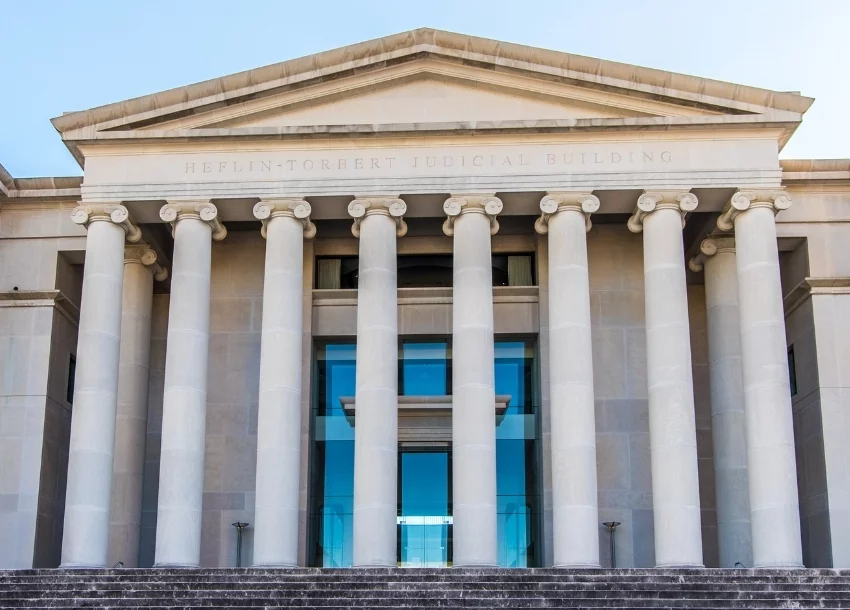
Alabama Supreme Court Appellate Alert: Decisions from November 20, 2026
The Alabama Supreme Court issued its weekly release list on Friday, November 20, which included the following orders and opinions of interest to the business community:
-
Ex parte NCAA: In a 6-3 decision, the Court held that Alabama courts lacked specific personal jurisdiction over Jeremy Pruitt’s claims that the NCAA improperly investigated his rule violations as University of Tennessee football coach, conspired with UT to permit the school to breach its contractual obligations to Pruitt, and interfered with Pruitt’s future football coaching opportunities by issuing a show-cause order to its over 1,200 member institutions. The Court reasoned that Pruitt’s claims arose not from any NCAA actions aimed at Alabama but from the NCAA’s investigation at its headquarters in Indiana and Tennessee and the resulting show-cause order issued by its committee in Ohio. Because the show-cause order was not state-specific, it was not directly aimed at Alabama even though Pruitt was feeling its effects there. Further, the Court rejected Pruitt’s argument that the NCAA had minimum contacts with Alabama by placing conditions on his employment at Jacksonville State, because Jacksonville State—not the NCAA—initiated that contact by asking the NCAA to begin show-cause proceedings so it could hire Pruitt. Finally, the court explained, the NCAA’s enforcement of its rules against member institutions in Alabama did not create specific personal jurisdiction because so holding would collapse specific personal jurisdiction into general.
-
Ex parte Meta: in an opinion by the Chief Justice, the Court unanimously held that Alabama courts had no personal jurisdiction over Alabama residents’ claims that Meta improperly permitted Alabama Facebook users' information to be shared with third parties. Because Meta is incorporated under Delaware law and has its principal place of business in California—and has tens of millions of users throughout the world—the Court held that Meta’s Alabama contacts, including 1.3 million users here, were not sufficiently systematic to give Alabama courts general jurisdiction over the company. The Court also held that the plaintiffs’ claims—which arose from downloading and using Facebook—were insufficient to give the Alabama court specific personal jurisdiction in this case. The Court reasoned that rather than specifically exploiting the Alabama market, Meta had offered its software for download to anyone in the world. Because Meta aimed those actions at users and not Alabama, the Court concluded that Alabama courts had no jurisdiction over the claims.
If you have questions about these decisions or want to discuss any other matters relating to Alabama appellate law, please do not hesitate to reach out to any member of Maynard Nexsen’s Appellate Group.
About Maynard Nexsen
Maynard® is a nationally ranked, full-service law firm with more than 600 attorneys nationwide, representing public and private clients across diverse industries. The firm fosters entrepreneurial growth and delivers innovative, high-quality legal solutions to support client success.