AI Mandates and Religious Objections: An Alabama Vaccine Case Offers a Warning
As artificial intelligence (AI) tools become a routine part of work, resistance to them is growing. Employers are building new workflows and performance metrics around AI to drive efficiency. In response, some employees are pushing back, and some are claiming that using these tools conflicts with their faith or moral principles. Employers that require AI for certain job functions should expect objections, including religious ones.
Requiring AI use and tying performance metrics to AI adoption is lawful in principle. The legal risk lies in execution: how the requirement is rolled out, measured, and enforced, and how the employer responds when an employee objects.
Religious Objections to AI Use Are No Longer Hypothetical
Religious objections to workplace technology are not new. For example, in EEOC v. Consol Energy, Inc., the EEOC sued on behalf of a West Virginia coal miner, an evangelical Christian, who refused on religious grounds to use a biometric hand scanner his employer had installed to track attendance. The miner asked for an alternative identification measure, and the employer refused. A jury found that the employer had failed to accommodate his religious beliefs. In 2017, the Fourth Circuit affirmed the resulting judgment of roughly $600,000.
AI, however, has drawn a reaction without precedent. Major religious leaders and denominations have spoken publicly about it, including Pope Leo XIV in his May 2026 encyclical on AI, the June 2026 Brentwood Statement on Artificial Intelligence and Christian Ministry, and the Southern Baptist Convention in its 2023 resolution, “On Artificial Intelligence and Emerging Technologies.”
Those concerns are already reaching the workplace. Earlier this year, Business Insider reported that a Unitarian Universalist software engineer had obtained a religious accommodation from her employer. She had objected to AI on environmental and ethical grounds that, she said, conflicted with her religious beliefs.
Alabama has no state statute barring religious discrimination in private employment, so Title VII controls for private employers. Under Title VII, employers with 15 or more employees must reasonably accommodate an employee whose sincerely held religious belief, practice, or observance conflicts with a work requirement, unless the accommodation would impose an undue hardship. After Groff v. DeJoy, 600 U.S. 447 (2023), undue hardship requires “substantial increased costs in relation to the conduct of [the employer's] particular business.” A minimal burden is no longer enough.
Applying Baugh v. Austal USA: A Cautionary Tale
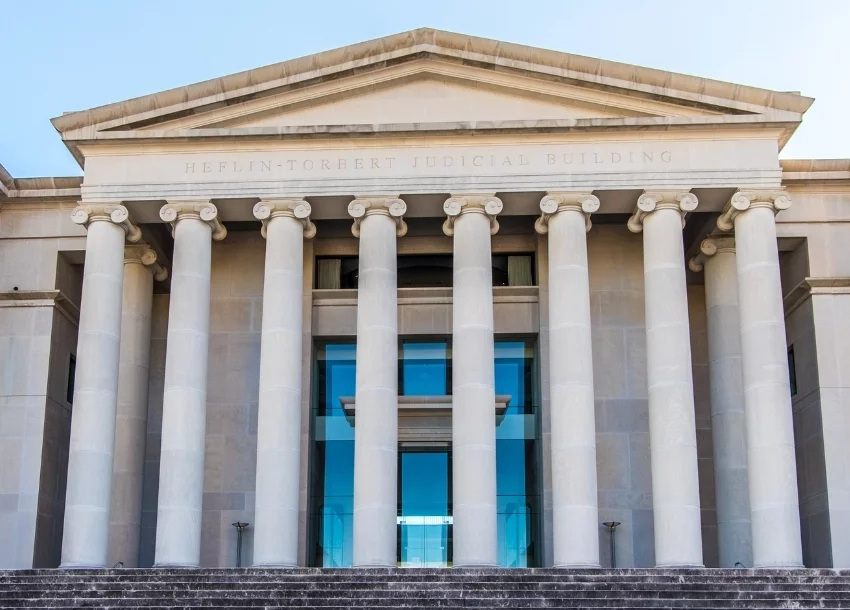
In Baugh v. Austal USA, LLC, 762 F. Supp. 3d 1201 (S.D. Ala. 2025), a Mobile shipbuilder denied religious exemptions from the federal COVID-19 vaccine mandate. Austal supported its denial with CDC and OSHA guidance, consultations with local medical and public health experts, an analysis of how closely its crews work together, the projected cost of testing, and concerns about federal-contractor compliance. Applying Groff, the court denied summary judgment, finding a genuine dispute over whether Austal faced undue hardship and noting that Austal had not shown that the cost would be “excessive” or “unjustifiable.”
The lesson for AI mandates is clear. If a detailed public-health record and financial costs did not entitle Austal to judgment before trial, an employer generally citing cost, efficiency, or consistency in refusing an AI exemption based on religion could expect the issue of undue hardship to go to a jury. And AI rarely carries safety stakes comparable to an infectious disease. An employer that denies a no-AI request will need concrete, role-specific evidence showing the “practical impact” in light of the employer’s nature, size, and operating costs.
Practical Considerations
- Document necessity by role. If AI is essential to a position, document the reasons. Those might be client contract requirements, safety, or productivity standards. Add any technology-related job requirements to job descriptions.
- Consider offering some accommodation. If after careful consideration the employer determines that the requested accommodation would create an undue hardship under the Groff standard, consider whether other accommodations could work. Options include manual methods, reassigning certain AI tasks to others, or adjusted performance metrics. Have accommodations been given to other employees, even for different reasons?
- Don’t debate sincerity. Challenging whether an employee’s belief about automation is sincere will likely not bode well. Focus instead on what the challenged task is and what the business can accommodate.
- Remember the ADA and the PWFA. AI tools must be accessible. Consider, for example, a visually impaired employee or applicant whose screen reader cannot navigate an AI tool’s interface, an employee with a cognitive impairment who needs extra time to review AI output, an employee with carpel tunnel needing accommodations for extended computer use, or a pregnant employee whose screen time limit may conflict with a heavier AI-driven workload. Do not treat these situations as a performance issue, but rather, if the employee makes a specific demand, as an accommodation request.
- Measure outcomes, not usage. Metrics based on how often employees use AI can create age-related disparate-impact risk. If “AI adoption” feeds into ratings, raises, or layoff selection, and older workers or employees with accommodations score lower, the metric itself becomes evidence for an ADEA, AADEA, or ADA claim. Before tying any consequence to usage, audit the results by protected group and confirm that the measure reflects actual job performance.
- Address monitoring and confidentiality issues. Disclose any tracking of AI use and limit employees to approved tools.
Many employers learned during the COVID-19 vaccine mandates that broad, one-size-fits-all requirements invite religious accommodation claims, and Baugh shows that even a well-documented hardship defense may not avoid a jury trial. Employers that plan for AI-related accommodation requests now, rather than react to them later, will be in the strongest position if a dispute reaches the EEOC or a courtroom.
About Maynard Nexsen
Maynard® is a nationally ranked, full-service law firm with more than 600 attorneys nationwide, representing public and private clients across diverse industries. The firm fosters entrepreneurial growth and delivers innovative, high-quality legal solutions to support client success.
Related Capabilities